
In this article, we will cover how to fix a very common issue with automatic knives: a slow or incomplete blade deployment.
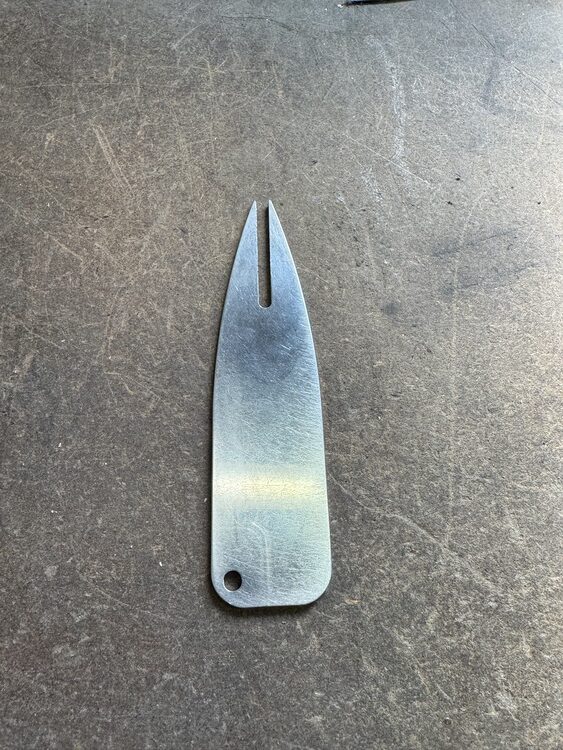
To do this, we will use one of our custom-made stainless steel adjustment tools, which is available at an affordable price. It is specifically designed to let anyone safely fix the kick spring and restore the knife’s proper function by carefully following these steps:
- ensure the blade is in the fully open and locked position;
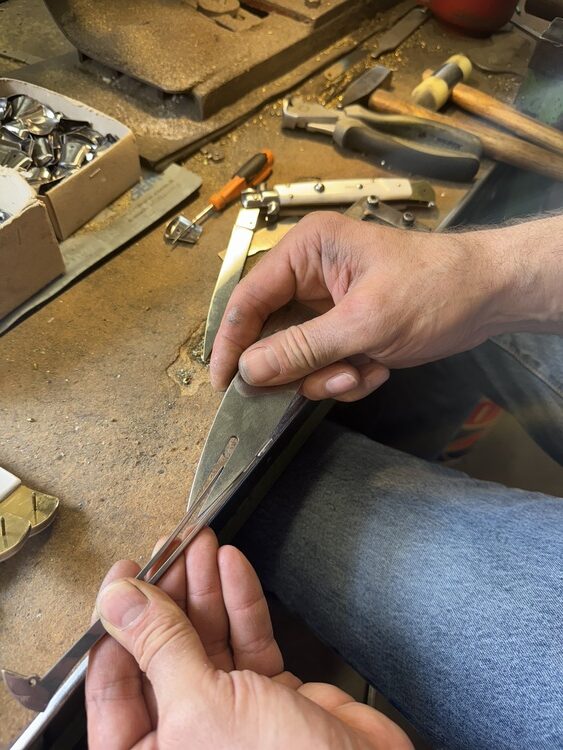
- insert the tool, being extremely careful not to let your hand slip toward the sharpened edge of the blade;
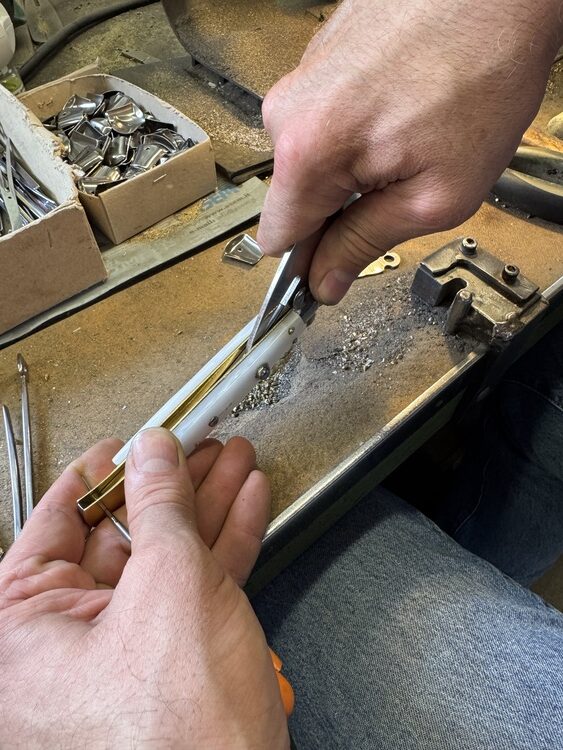
- once inserted, pull the tool upward gradually, a little bit at a time;
- repeat this process until the blade fires completely (as shown in the following video);
- be careful not to bend the spring too far outward, as you risk damaging the back section.
Why we use a 4mm blade and spring
A few years ago, we decided to upgrade both the blades and springs of our switchblade knives to a 4mm thickness. We made this choice to achieve:
- better, more decisive, and reliable firing performance;
- greater long-term durability of the mechanism;
- more precise assembly of the blade and spring.
All our springs and blades are laser-cut to ensure tighter tolerances and a higher quality of fit and function during the mechanism’s operation.
Possible spring defects: micro-cracks and heat treatment
Despite our strict attention to materials and craftsmanship, occasionally issues may arise:
- during laser cutting, the generated heat can cause micro-cracks that are invisible to the naked eye;
- during the quenching or tempering processes, if the ideal temperature is not perfectly reached, structural defects can form in the material.
In both situations, the spring might end up too soft or too hard, increasing the risk of it breaking or losing its firing power over time.
Leaving the knife closed for long periods: what happens to the spring
Another cause of a slow-opening switchblade knife is the habit of storing automatic knives closed for extended periods, keeping the spring constantly compressed and under tension. Over time, this can lead to:
- a less effective firing action;
- a slower or “tired” blade deployment.
Fortunately, in many cases, this can be easily fixed using our stainless steel tool, which was designed specifically for this purpose.
The attached photos demonstrate step-by-step how to properly adjust the spring.
How to use our tool safely (understanding the risks)
The process involves adjusting the spring to restore proper tension and improve the firing action.
It is crucial to pay close attention:
- never force the spring too far outward;
- remember that the spring tab is thin and delicate;
- an overly aggressive adjustment can create micro-cracks or cause the spring to snap immediately.
When to replace the spring of your slow-opening switchblade knife
If the spring is damaged or broken, a simple adjustment won’t be enough; it will need to be completely replaced.
We generally prefer to perform spring replacements directly at our headquarters so we can:
- check the overall condition of the automatic knife;
- ensure the correct alignment of all components;
- guarantee the flawless operation of the firing mechanism.
We are also working on a dedicated article about spring replacement, covering the basics for those who want to try this more advanced repair on their own.
Contact us if you need help with your Frank Beltrame switchblades.